Work/Action roguelite
Granny vs. The End
The world ended. Everyone fled except Grandma, who refused to leave the house she has lived in for 52 years. She has a cane. It is also a shotgun.
- My role
- Game design, writing, art direction, voice direction and build direction
- Genre
- Top-down action roguelite with build crafting. Single player.
- Engine
- Unity, 2D, C#
- Status
- In development. The trailer’s end card: “Coming soon to mobile & Steam”.
What it is
Granny vs. The End is a top-down action roguelite. You move, she aims and fires on her own, and after every wave you spend Coupons in Earl’s bunker shop, building something ridiculous out of Charms that bend the rules. A run is eight Days. Each Day ends in a boss.
I’m the designer and the director of all of it: the rules, the economy, the jokes, the art direction, the cast and their voices, and the trailer above. The game is built in Unity. The art and voices are generated under my direction, to a style I lock down one character sheet at a time.
The humor is not decoration. Item names, flavor text and voice lines are a core feature, and they are written the way the characters would say them: petty, stubborn and savage.
In numbers
- 10playable grannies, each with her own weapon, perk and downside
- 8bosses, one at the end of every Day
- 22weapons, plus evolutions
- 40+Charms that bend the rules
- 1.2Mthe hit that finishes the final boss in the trailer
- 376pieces of game art in 12 days, 249 of them in one day
- 70later images that reference Edna’s one character sheet
- 28designed voices for 23 characters
The first four figures are stated in the trailer. The rest are counted from the game’s art and voice history.
The cast, from every side
Ten grannies, eight bosses and the neighbors. Each one was drawn as a sheet first: front, side, back and three faces. Pick anyone and turn them around.
Choose your granny
21 characters, each cut from their own design sheet
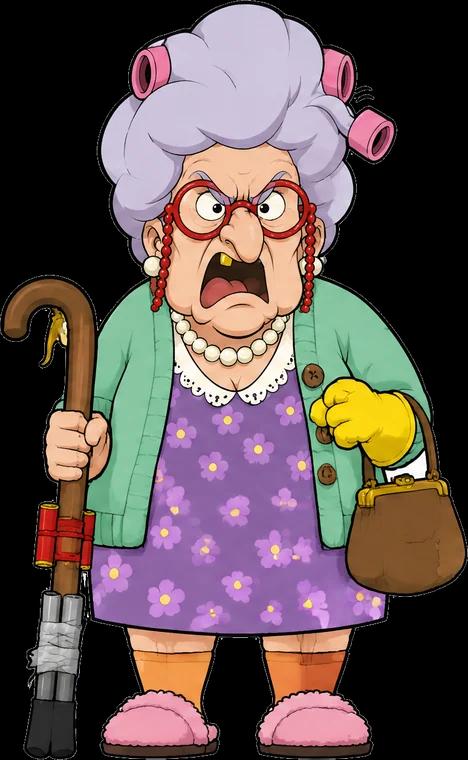
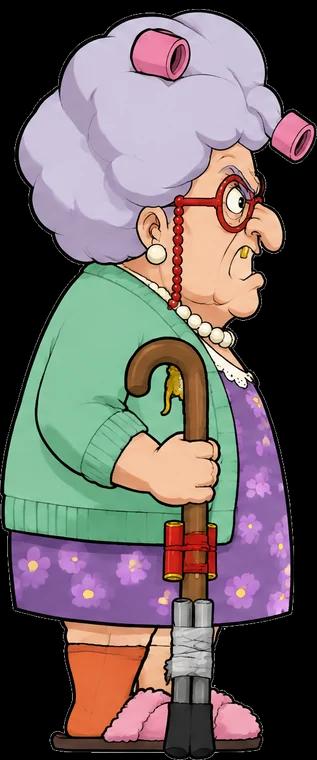
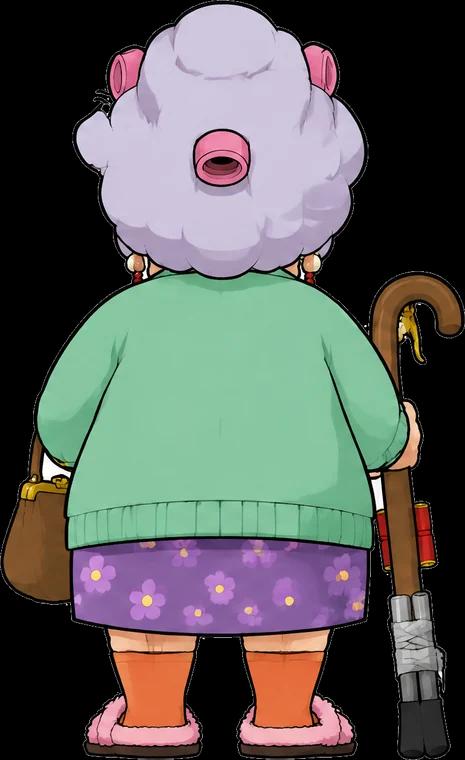
Granny Edna, front view
Grannies
Granny Edna
The classic. No perks, no downsides.
- Starts with
- The Cane-non
- Perk
- None
- Catch
- None
I have a coupon that expires Tuesday.
Expressions
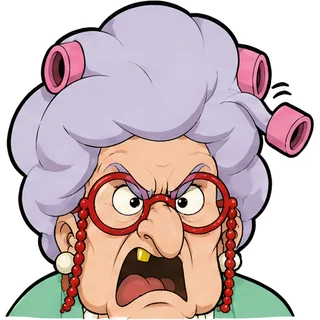
The drawings are cut straight from the design sheets, which are shown whole further down this page. Perks and boss rules are the game’s design and can change before release. The voices are the game’s own, reading lines from the trailer script.
How it is made
From the rule at the center of the game out to the trailer.
One rule: Damage × Fury
Every hit does Damage times Fury. Fury starts at 1. Everything that adds applies first, then everything that multiplies, left to right in the order your Charms sit in their slots. So the same five Charms in a different order are a different build, and that is the game.
Charms are written to tempt you into bad ideas. Bad Hip: move 30% slower, Fury times 2. Prune Juice: every tenth shot does 10 times Damage. Spite: up to 10 times Fury when you are down to your last point of health. Social Security: Fury times 1.5 for every 10 Coupons you are holding. Fruitcake does nothing at all, then gives 50 times Fury if you carry it for all 8 Days.
The design keeps all damage in one function, in numbers large enough to reach billions without breaking, shown short: 12.4K, 3.1M, 7.7B. In the trailer the final boss goes down to a hit of 1.2M.
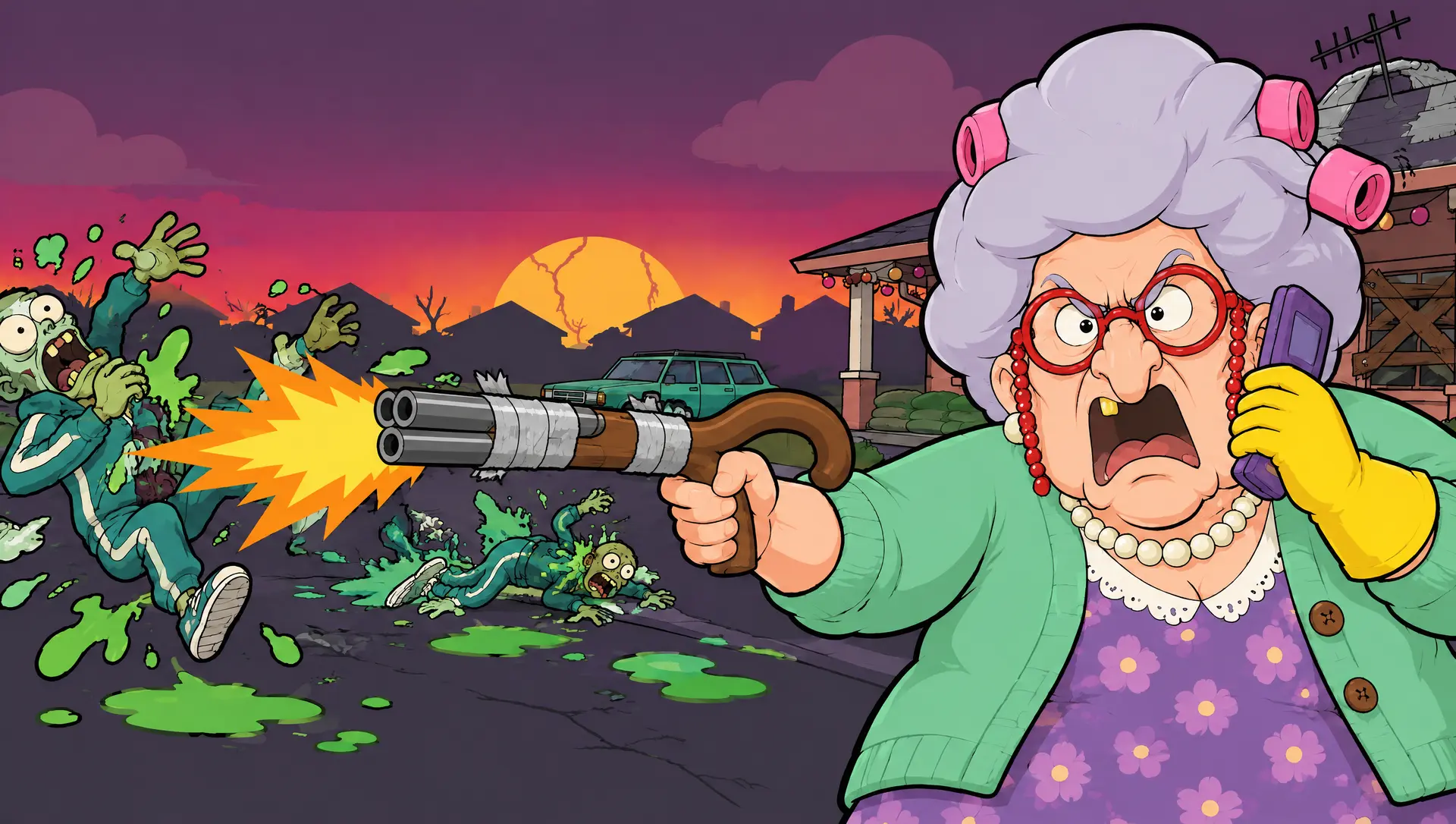
Edna and the Cane-non. The art is also the game’s video thumbnail. A run: eight Days, one bunker shop
A run is eight Days: Grocery Store, Pharmacy, Strip Mall, Bingo Hall, Cemetery, Suburbs, Hospital, City Hall. Each Day is two waves and a boss. The trailer shows four of them in play: the Strip Mall on Day 3, the Suburbs on Day 6, the Hospital on Day 7 and City Hall on Day 8.
After every wave you land in Earl’s Bunker. Coupons buy Charms, items and weapons. A reroll costs more each time. Coupons you do not spend earn interest, so greed is a strategy.
Weapons evolve: max out a weapon while holding its matching Charm and it becomes something else. In the trailer, a maxed Cane-non plus the Restraining Order turns into the Twelve-Gauge Lawn Sprinkler, which fires a full ring of pellets around her as well as the aimed cone.
Once you can win, eight Bingo Cards stack difficulty on top, one rule at a time. Card 4 is called Knock at the Door.
Ten grannies and eight bosses, written like people
My rule for the script: every line only works for that character. Her age, her grudges, her history, her situation. If a line could be said by anyone, it is cut.
Edna is the classic: no perks, no downsides. Nana Lou is ex-Army and still does push-ups. Mee-Maw has a cast-iron skillet and no fear. Granny Gigi is a retired showgirl. Lola’s slipper always comes back. Babushka has survived worse. There is a secret one who has seen the end before.
Each boss is a fear with a mechanic attached. The HOA President fires violation notices that root you in place. The Grandkid Who Never Calls ignores you, then calls. The last boss is The Telemarketer: “Your call is important to us.”
Art: one character sheet, seventy references
Generated art drifts. Leave a model alone and the same granny comes back taller, grittier, with a different nose. So nothing is generated without a reference. Every character starts as a sheet: front, side, back and three expressions. That sheet is attached to every later image of that character, and the key features are repeated word for word in the prompt.
Edna’s sheet has been attached to 70 later images. In twelve days the game took 376 pieces of art: top-down sprites, shop icons, backgrounds, floor tiles, prop sheets, portraits and cutscene panels. 249 of them were made in one day.
Every prompt ends with the same sentence, the style lock: thick clean black outlines, flat saturated color, one hard cel shadow, big simple shapes. And no image may contain words. Generated lettering comes out misspelled, so every word in the game and the trailer is set in the game’s own fonts afterward.
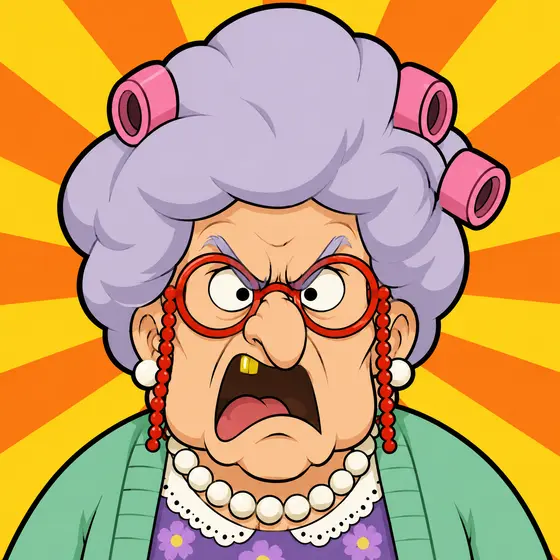
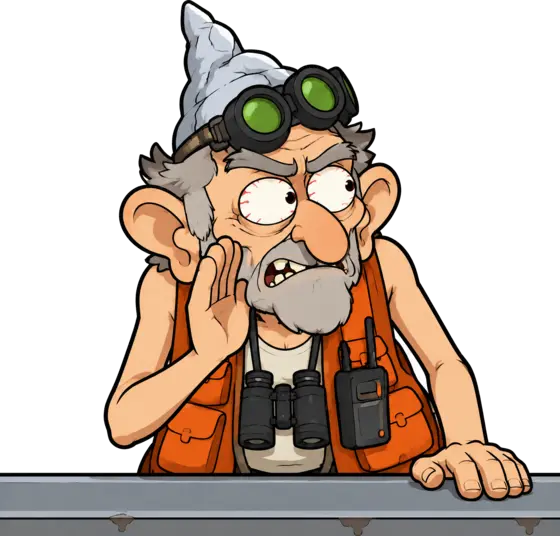
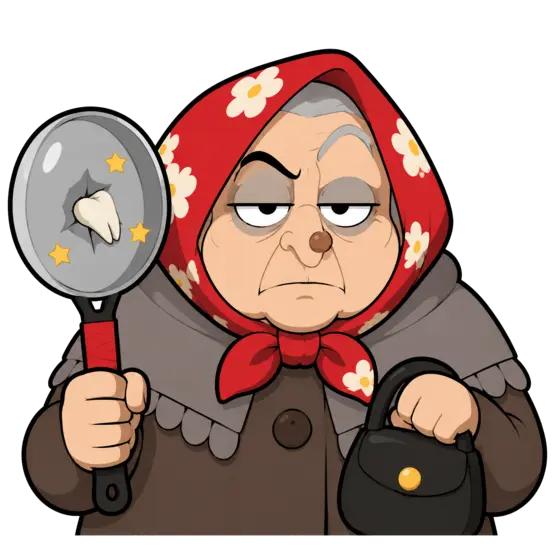
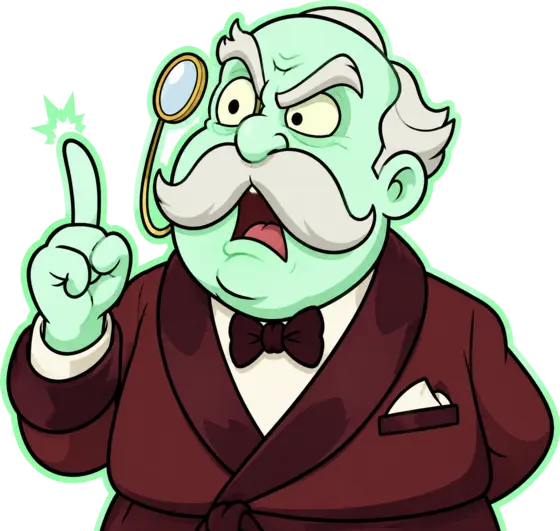
Four of the cast. Same outline weight, same shadow, same dusk palette, because the same rules end every prompt. The opening: eight panels
The story of how the world ended is told in eight panels at 3840 by 2160, narrated by Grandma’s grandson Benji as a school report called “My Hero”. A neighbor pours a whole jug of glowing lawn food on his lawn. His garden gnome grows into Big Mama Gnome. Mr. Whiskers drinks from the birdbath and comes back with six eyes. The rescue bus will not take the cat. So Grandma stays.
Those eight panels took 33 attempts. Approved panels become references for the ones after them, so the street, the house and the cat stay the same from frame to frame. Benji’s report includes the line: “He coughed up a hairball. It blinked.”
The eight approved panels, cut together as a storyboard. No sound. Voices: cast, measured, re-cast
Every character has a designed voice: 28 voices for 23 characters, because five were designed again. When a voice missed the character, the same lines were rendered on the old voice and the new one and compared before anything was replaced. Grandma Sue went through three. Three bosses were re-voiced.
The design gives each granny lines for fourteen moments in a run, with random variants, a short cooldown so she never talks over herself, and a priority order so boss lines and death lines always win. There is a theme for each of the eight bosses and each of the eight zones.
You can hear some of the cast on the home page of this site.
The trailer: recorded, never generated
The brief I wrote for the trailer has one bar to clear: someone who has never seen the game laughs at least three times on first watch. It also assumes most people watch muted and scroll away within three seconds, so there is chaos in the first frame and every line is captioned.
All gameplay is recorded from the real game. The capture process is designed to be repeatable: a fixed time step and a seeded scenario per shot, so a shot can be recorded again and come out the same.
The cut on this page opens on a ringing phone, “Hi! Quick survey! Are you over eighty?”, runs through the grannies, the bosses and an evolution, and ends with her grandson finally calling to ask whether he is still in the will. Her answer is the last line.
Behind the scenes
The working material: the sheets, the references and the frames that the game’s look is built from, and what each one is for.
A character starts as a sheet
Front, side and back, then three faces. Nothing else is drawn of a character until this exists and I have approved it.
From then on the sheet is attached to every prompt that includes that character, and the things that matter (the lavender perm, the pink rollers, the one gold tooth, the yellow rubber glove) are repeated in words. That is how the same grandma comes back every time. Edna’s sheet has been used 70 times.
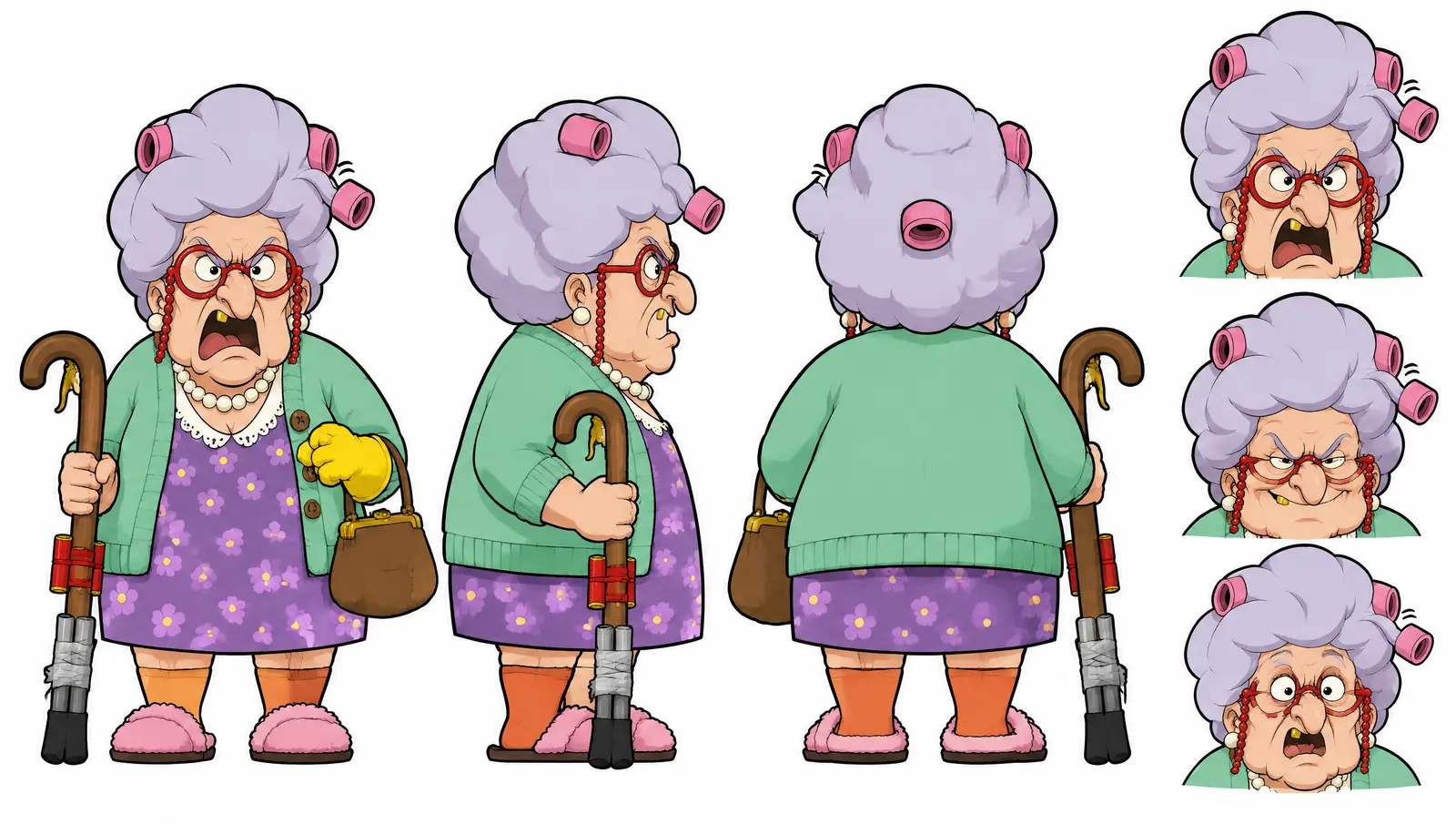
Granny Edna. Three views and three expressions: furious, smug and shocked. 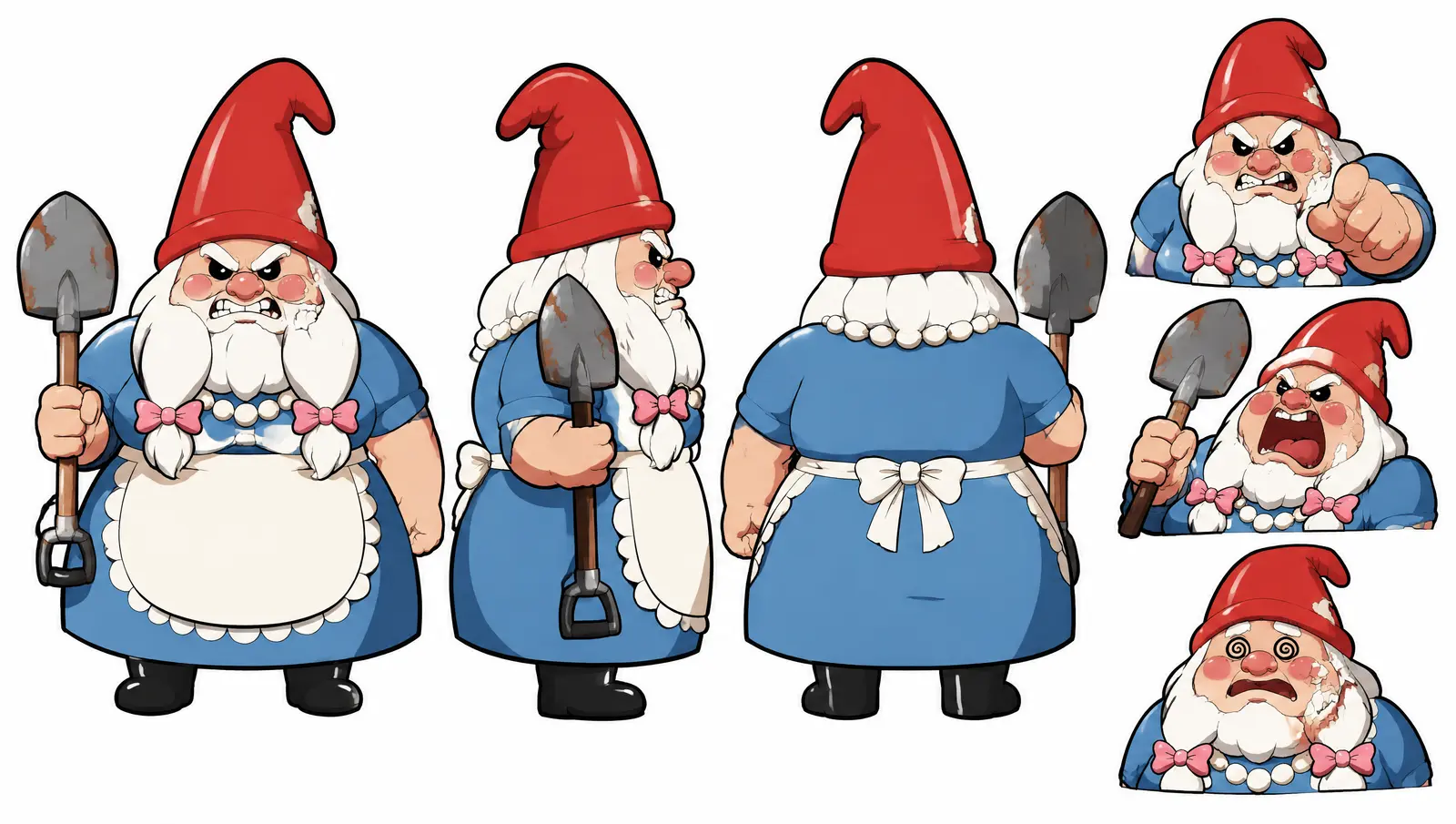
Big Mama Gnome, the Day 1 boss. She started as a neighbor’s lawn ornament. 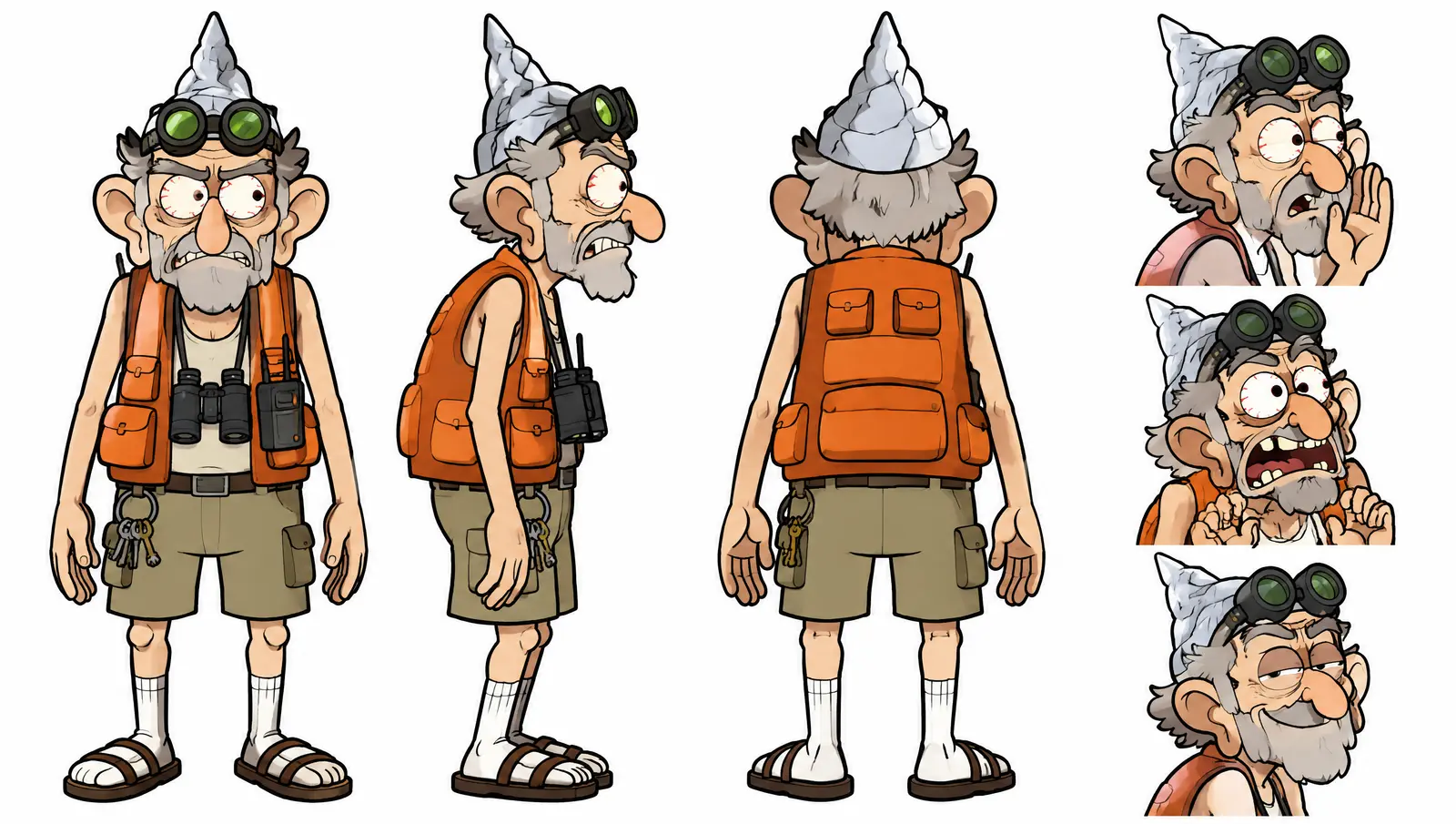
Earl, who runs the Bunker Shop. Tinfoil hat, night-vision goggles, sandals with socks.
One street, drawn once
Maple Court is a reference too. This one picture of the street by day was attached to all eight opening panels, so Edna’s house, the yellow house next door, the white fence, the flamingo and the gnome are in the same place in every frame.
The second picture is the same street after: boarded windows, sandbags, green goo on the road and a cracked sun going down behind it.
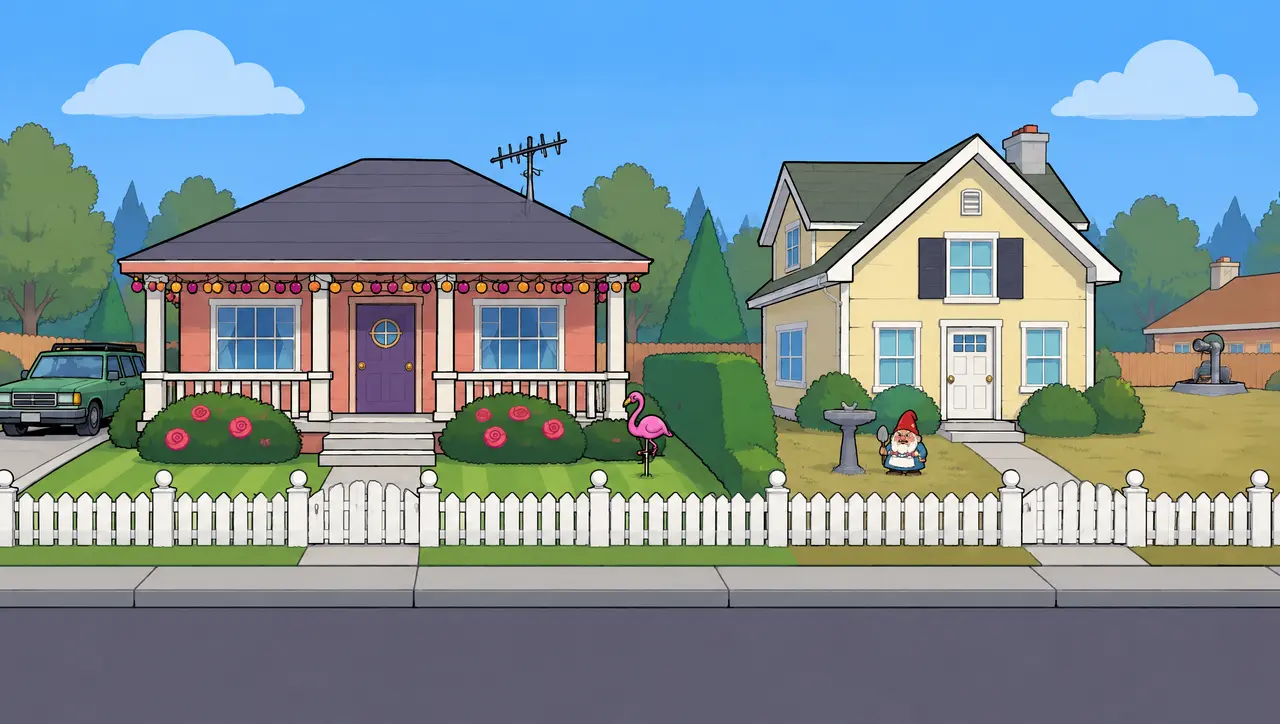
Maple Court, before. 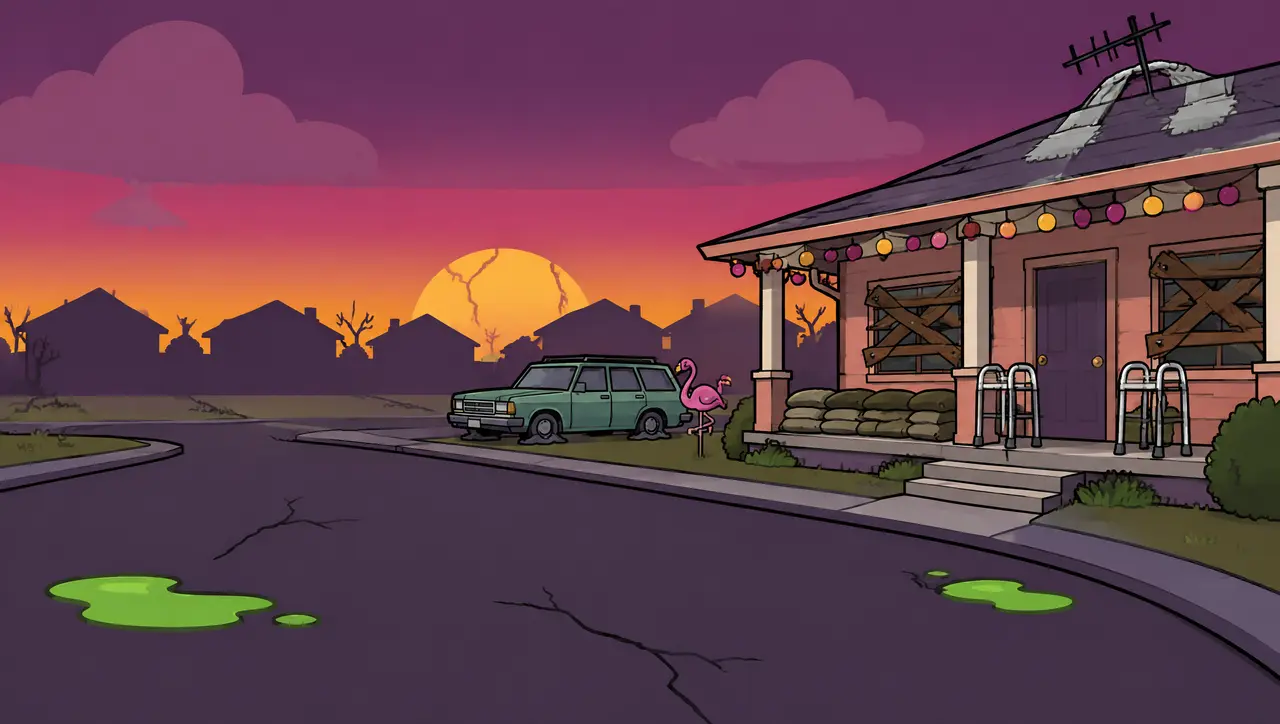
Maple Court, after.
The opening, panel by panel
Eight panels tell how it happened. Each one was regenerated until it was right (33 attempts for the eight), and each approved panel became a reference for the ones after it.
Things that have to be counted are the hardest. The cat has exactly six eyes from panel four on, and the prompt says so in capitals.
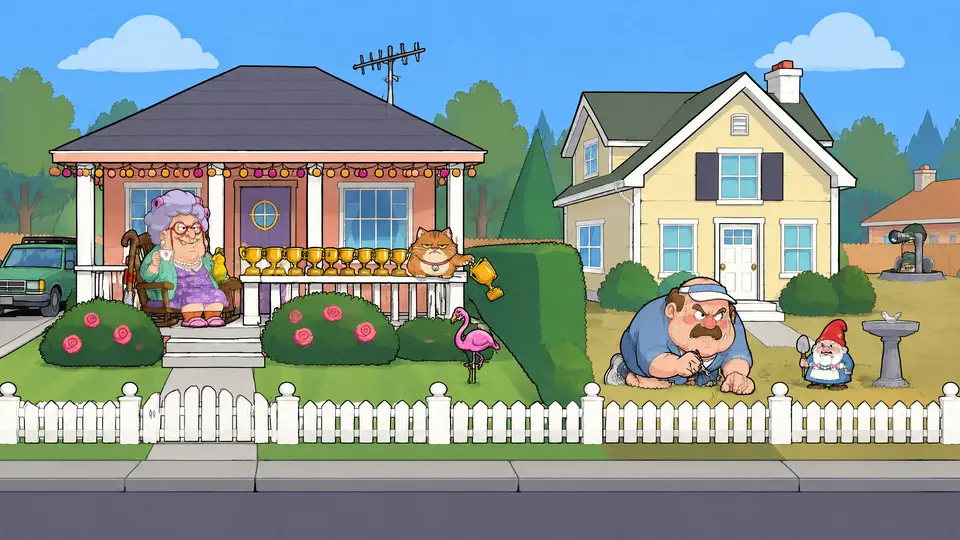
1. An ordinary day. The neighbor loves his lawn. 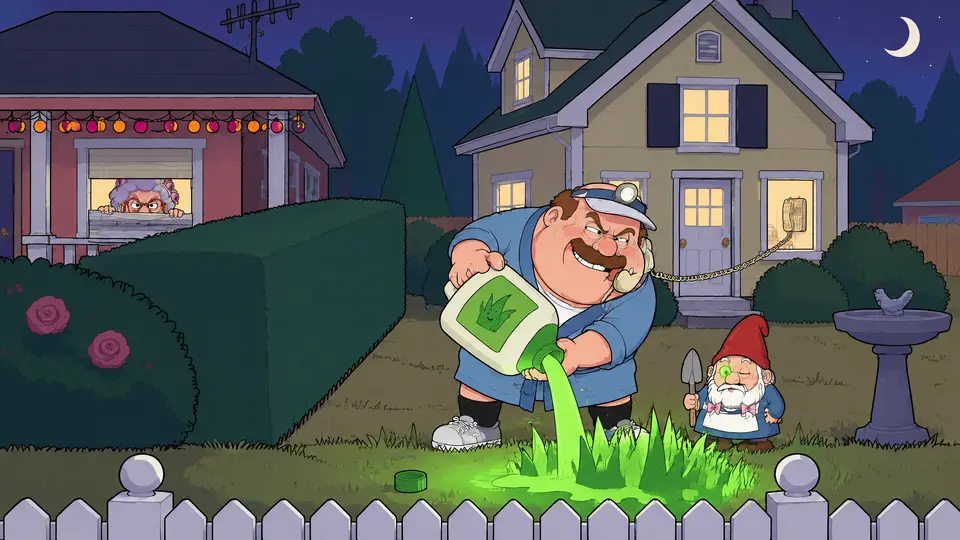
2. A whole jug of glowing lawn food. 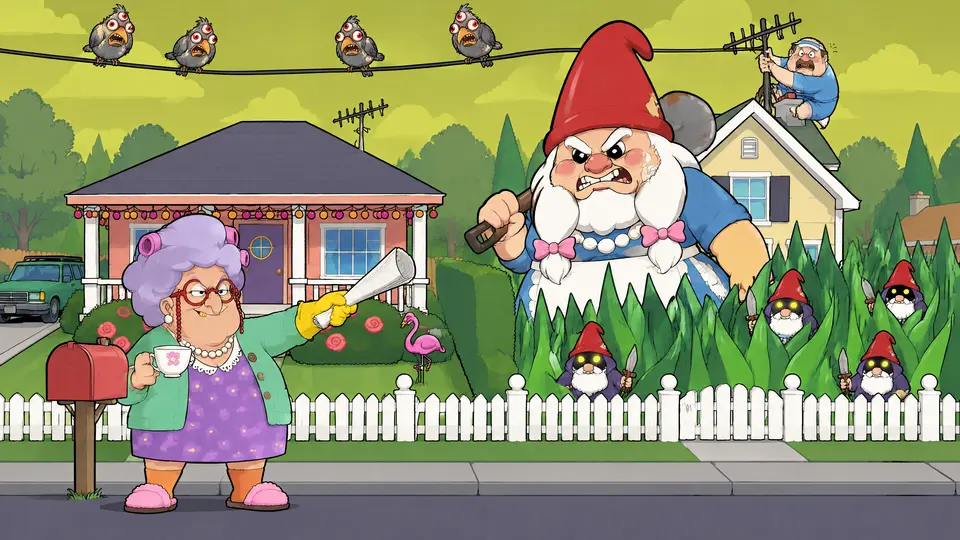
3. By morning, the gnome has grown. 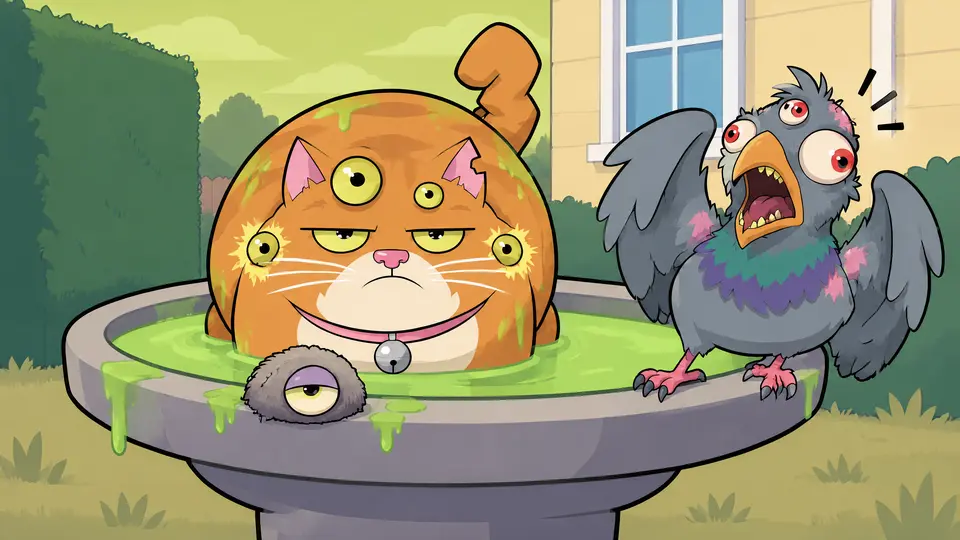
4. Mr. Whiskers drinks from the birdbath. Six eyes. 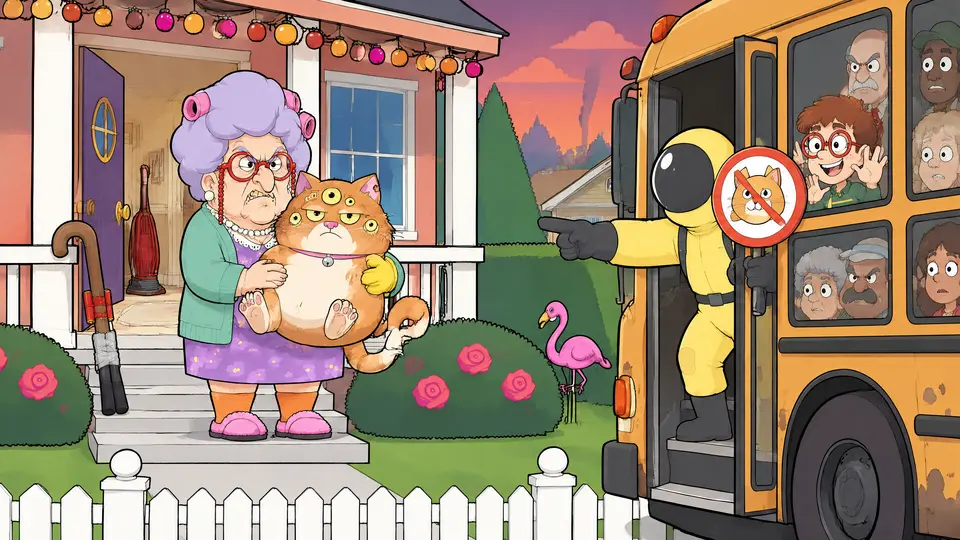
5. The rescue bus will not take the cat. 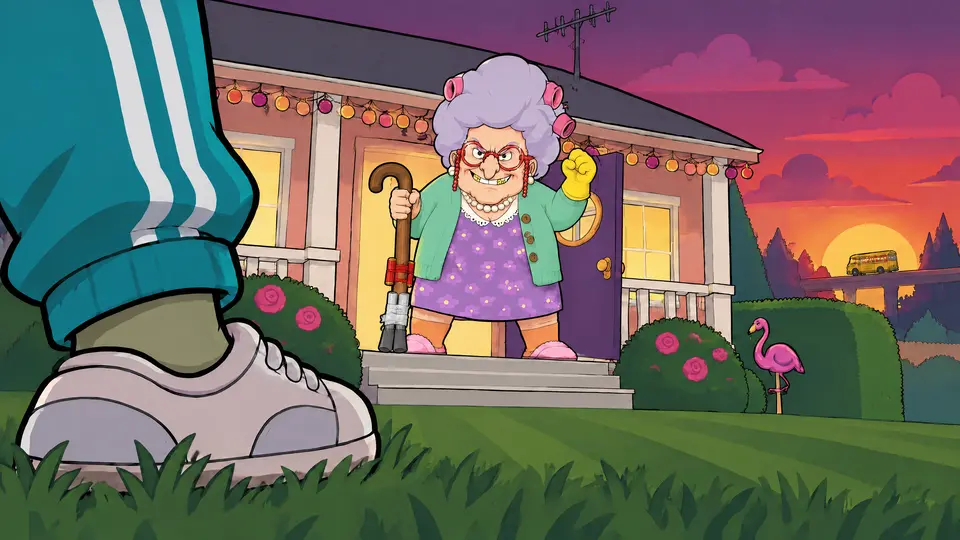
6. Somebody steps on her lawn. 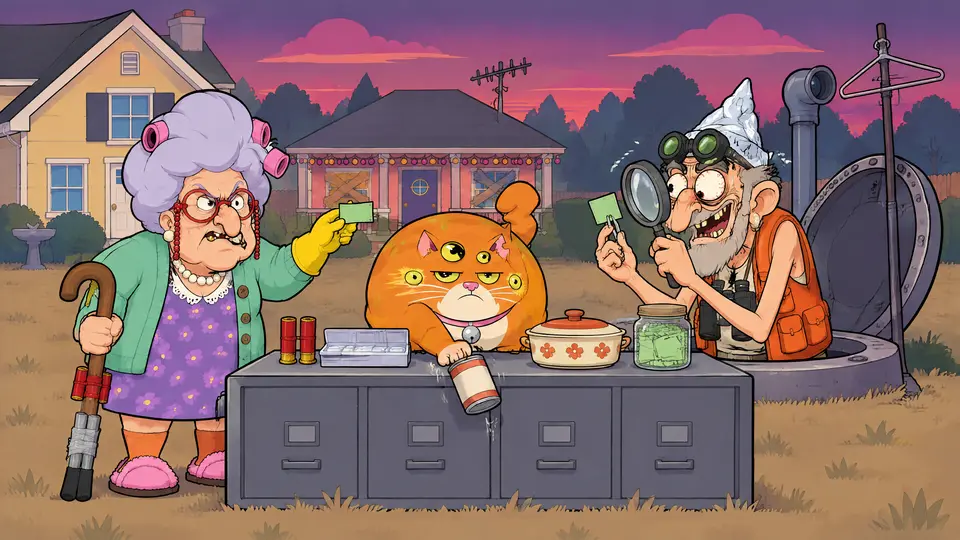
7. Earl opens for business. Coupons only. 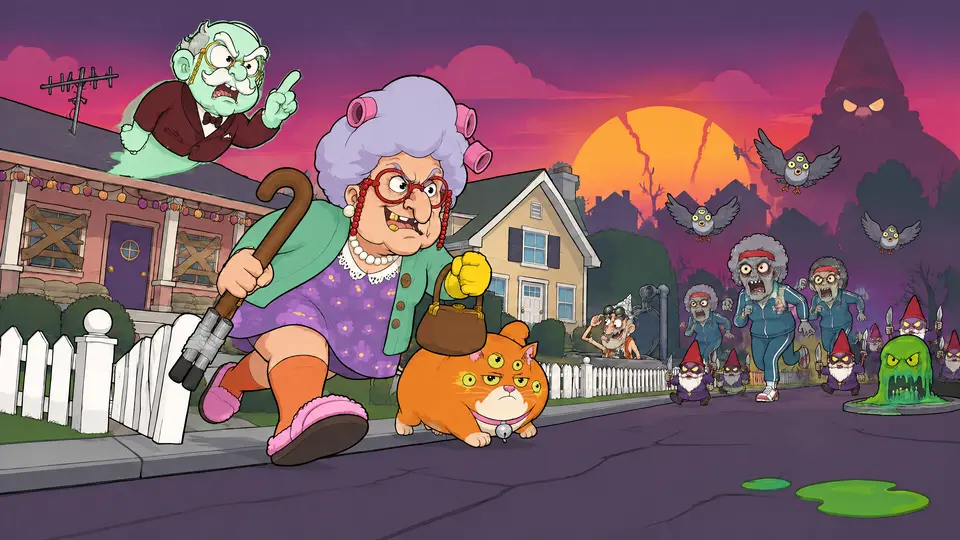
8. So Grandma stays. This panel is the game’s key art.
Rooms and props
Home is a base you build up between runs, one room at a time. Each room is one background in the same dusk palette.
Level props are made the opposite way: separate objects on a plain sheet, never one painted scene, so a level can be assembled from them piece by piece.
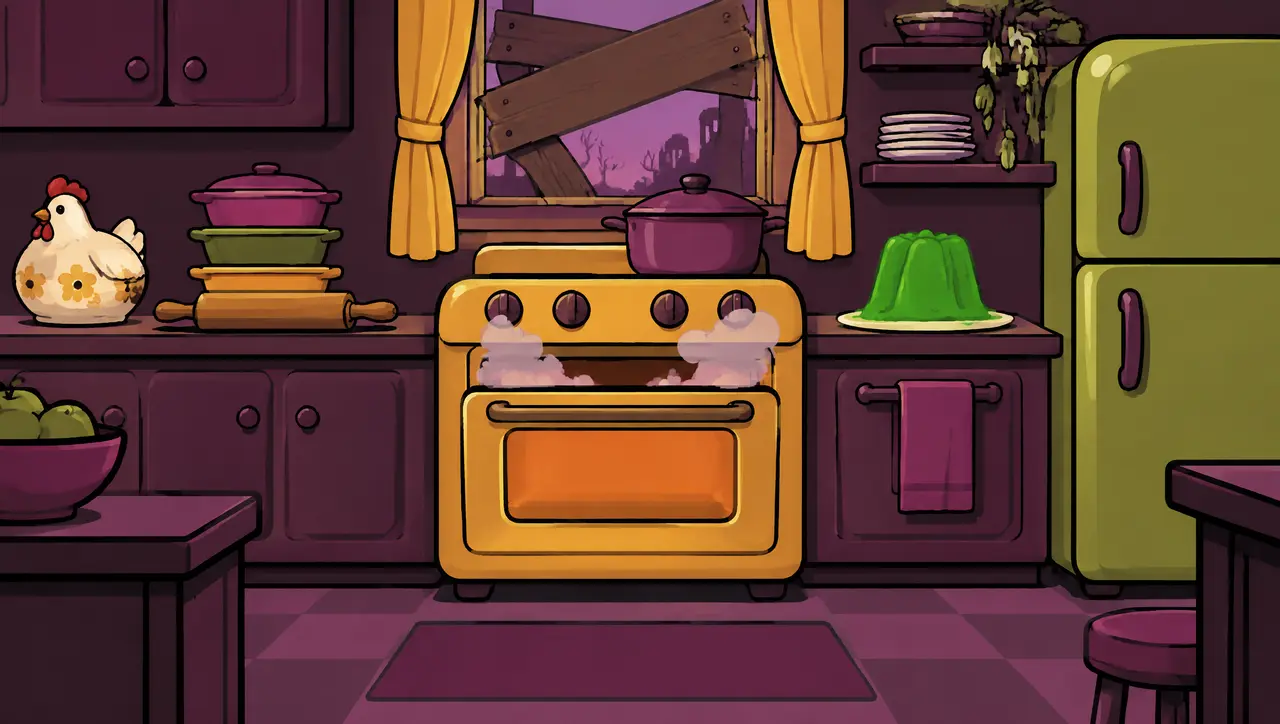
The Kitchen. 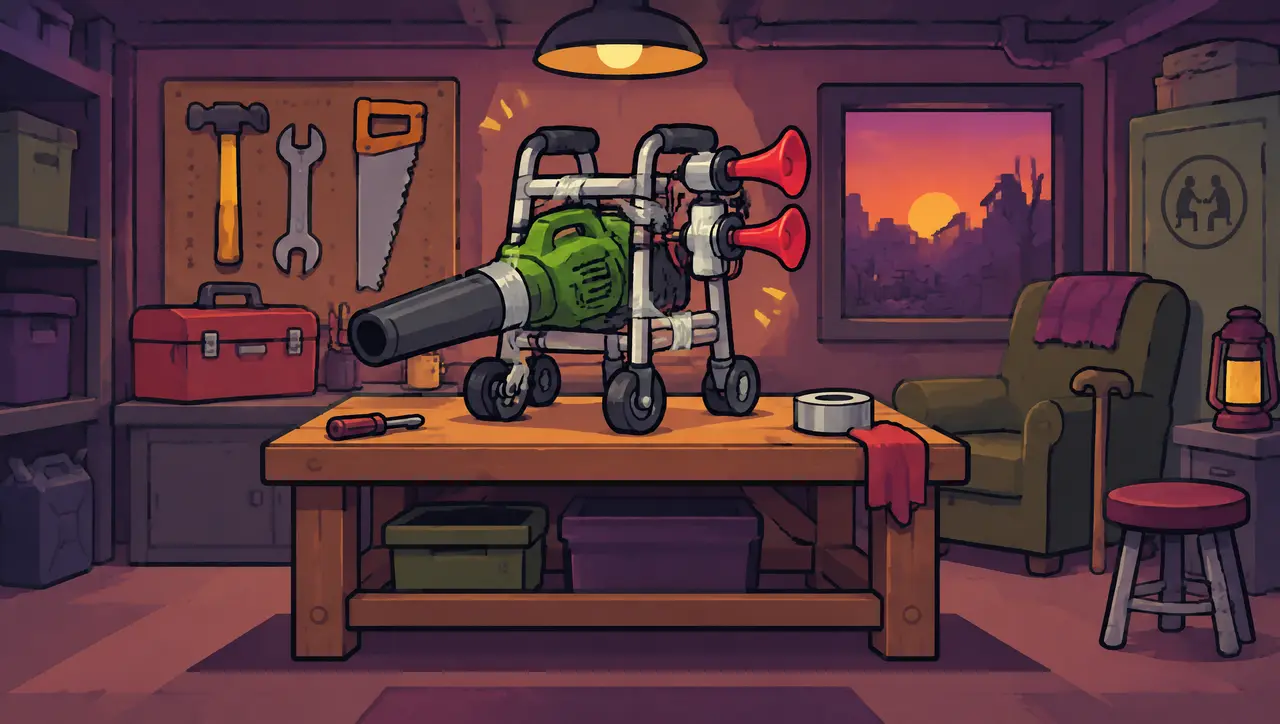
The Workshop, where walkers become weapons. 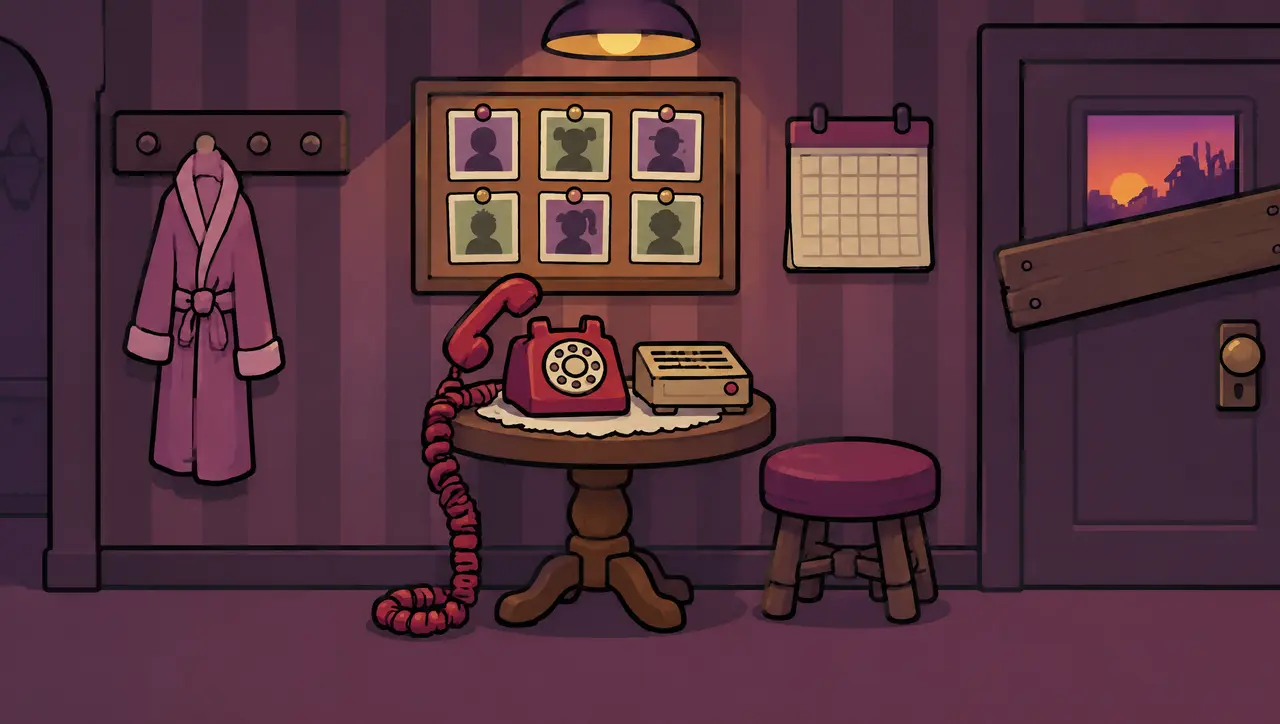
The Phone Nook, under the family photos. 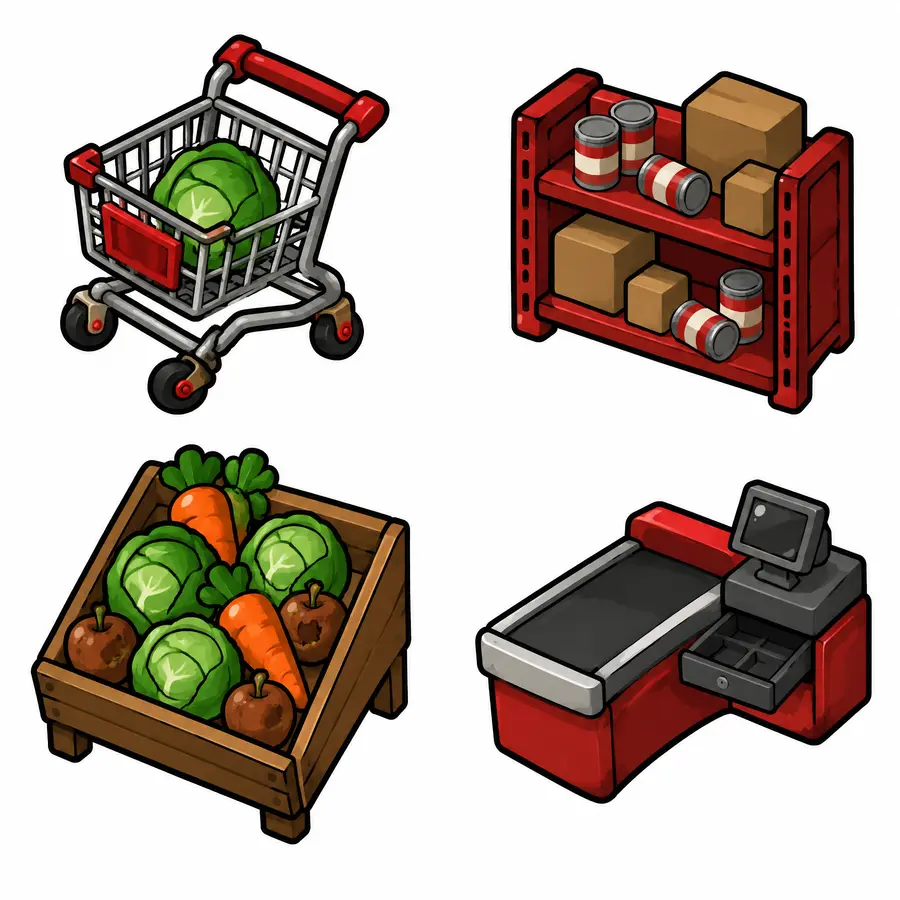
Grocery Store props, one object at a time.
A redo, with one instruction
When a picture is nearly right, starting over would lose what works. So the fix is its own kind of prompt: recreate this exactly, and change only these two things.
Here it was Grandma Doris’s hand and the pencil behind her ear. Everything else had to come back the same: the swirl eyes, the dice cup, the heart, the sweat drops.

Before. 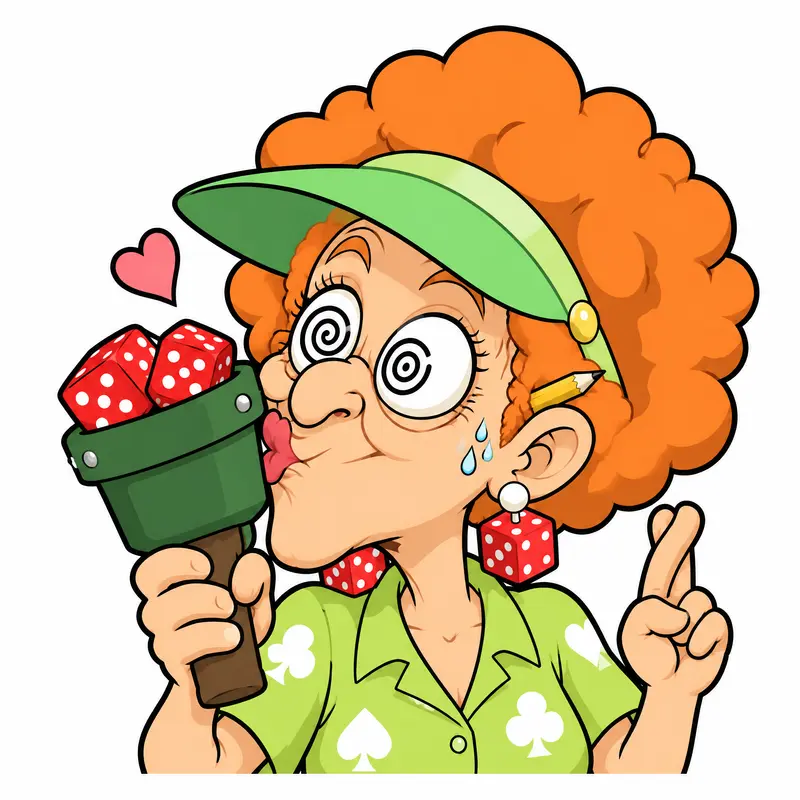
After: the same picture, two things changed.
The hard parts
Most of them are about making a machine draw the same grandma twice.
Style drift
- What happened
- Without a reference, each new image comes back grittier and less like the last.
- What fixed it
- Game art attached to every prompt, the key features repeated word for word, and one fixed sentence at the end of every prompt. One sheet, reused 70 times.
The Cane-non grows barrels
- What happened
- Ask for a cane that is a shotgun and you get three or four barrels, or a gun pointed at the viewer.
- What fixed it
- The exact wording, every time: “a DOUBLE-barrel shotgun made from a wooden walking cane, exactly two barrels”. The final thumbnail is a redo with one instruction: change only the gun.
Things that must be counted
- What happened
- Six eyes on the cat. One rubber glove, not two. Models do not count.
- What fixed it
- “Exactly SIX, no more, no fewer”, plus an already approved panel attached as the layout. One panel still took 5 attempts, another 9. Rejected versions feed a list in the next prompt of what the last one got wrong.
Generated lettering
- What happened
- A mockup came back with a phone screen reading “CALL CALL”.
- What fixed it
- No words in any generated image. All text is set afterward in the game’s own fonts.
Voices that missed the character
- What happened
- A voice can match its description and still be wrong for the joke.
- What fixed it
- The same lines on the old voice and the new one, side by side, before replacing anything. Five voices were re-designed.
Numbers that have to get absurd
- What happened
- A build that works multiplies itself past what ordinary game math is sized for.
- What fixed it
- One damage function, numbers large enough for billions, and short formats on screen. The trailer’s last hit reads 1.2M.
A screen full of enemies on a phone
- What fixed it
- The design reuses every bullet, enemy, damage number and effect instead of creating and destroying them, with a target of 60 frames per second on a mid-range phone with more than 150 enemies on screen. That is a target, not yet a measured result.
Viewers who watch muted and leave in three seconds
- What fixed it
- Chaos in the first frame, a hard cut on every punchline, and every line captioned in the picture.
The roster
From the design document. The trailer shows the character select screen with the unlock rule under each locked granny.
| Granny | Who she is | Starts with | The catch |
|---|---|---|---|
| Granny Edna | The classic | Cane-non | No perks, no downsides |
| Nana Lou | Ex-Army, still does push-ups | Rifle | A sixth Charm slot, but the shop costs more |
| Mee-Maw | Cast-iron skillet, no fear | Skillet | Double health, melee only |
| Big Rosa | Runs the bingo hall’s betting ring | Coin purse sling | Earns more interest, weak start |
| Babushka | Survived worse, unimpressed | Frying pan | Heals only between Days |
| Granny Gigi | Retired showgirl | Feather boa whip | A dodge spin, less health |
| Grandma Sue | Never stops knitting | Knitting crossbow | Knits her own Charms, fewer slots |
| Lola | Her slipper always comes back | Slipper boomerang | An extra Pill each Day, slipper only |
| Grandma Doris | Feels lucky | Lucky dice launcher | Half-price mystery boxes, bought blind |
| Granny Zero | Secret. Has seen the end before | Rusty revolver | Starts with two curses |
The bosses
| Day | Boss | What it does | What it says |
|---|---|---|---|
| 1 | Big Mama Gnome | Every hit spawns more gnomes | “Jerry’s yard was the beginning.” |
| 2 | Doctor Deathscript | Throws pills. Some heal him, some poison you | “Your insurance doesn’t cover survival.” |
| 3 | The HOA President | Violation notices root you in place | “Your lawn is 0.5 inches too tall during the end of the world.” |
| 4 | The Bingo Caller | A ball machine. The attack changes with each number | “N-42. Your death.” |
| 5 | The Undertaker’s Cousin | Raises fallen monsters | “Family business. Business is booming.” |
| 6 | The Grandkid Who Never Calls | Ignores you. Then calls | “Hey Grandma, can I borrow money?” |
| 7 | Head Nurse Clawdia | Locks the exits, enrages everything | “Visiting hours are OVER.” |
| 8 | The Telemarketer | A mass of phone cords that puts you on hold | “Your call is important to us.” |
The rules I set
From the design document that the whole game is built from.
- Keep all the humor. Item names, flavor text and voice lines are a core feature, not decoration.
- Work one step at a time.
- If something feels unfun, stop and fix the feel before adding more content.
- Keep permanent power small, so skill and builds matter more than grinding.
- No pay-to-win. Charms, weapons and grannies are never sold for real money.
- Hard cut on the punchline.
How I work on it
The game runs from one design document: the rules, the numbers, every character, every boss line, and a seven-phase build plan that goes one tested step at a time. The trailer has its own document: beat sheet, every line with its delivery, the overlay style, the shot list and the budget.
I direct. The art model, the voice model and the coding agents do the making, and nothing is final until I have approved it: every voice line, every still, every preview.
Made with
- Engine
- Unity, 2D, C#. Items, grannies, enemies and bosses are data, so adding one is filling in a card, not writing code.
- Art
- Generated on Higgsfield under a fixed style lock, from character sheets, at 2K and 4K.
- Voice and music
- ElevenLabs: a designed voice per character, a theme per boss and per zone.
- Trailer
- Gameplay captured from the game. Overlays and captions set in the game’s own fonts.