Work/Animated story series
Stickman Romance
One-minute stick-figure love stories where the top comment decides what happens next. Every frame is drawn by code.
- My role
- Creator, writer and director
- Format
- Vertical, 1080 by 1920, 30 frames per second, 55 to 65 seconds
- Made for
- Instagram Reels, TikTok and YouTube Shorts
- On Instagram
- @stickmanromance
What it is
Each episode runs about a minute. There is a cut every second or two, the captions are colored by who is speaking, and it ends on a question. Then the audience answers, and the next part opens on the winning comment, word for word.
There is no animation software in it and no image generator. The characters, the sets, the lighting, the camera, the captions and the sound mix all come out of a Python program I directed into existence, one rule and one fix at a time. An episode is a single Python file.
The first reel was finished 26 minutes after the first prompt. Getting from that reel to one I was willing to post under a series name took a production rulebook, a mandatory frame audit, and an episode that was thrown away whole and rebuilt.
In numbers
- 24episodes across six stories
- 46,080frames: 25 minutes 36 seconds of animation
- 676shots, cut from 967 drawn stills
- 23,376lines of Python in 36 files
- 4,487caption words, each timed to the voice
- 137voice takes kept, 45 minutes of performance
- 26 minfrom the first prompt to the first finished reel
- < 21 minfrom prompt to three finished platform files, on two later episodes
Every figure on this page is counted from the project itself: its code, its history and its files.
More episodes
Part 1 of I’m Her Emergency Contact is at the top of this page. Here is Part 2, and the first parts of two other stories. Press a cover and it plays.
I’m Her Emergency ContactPart 2 · 0:56
How an episode is made
The pipeline, stage by stage.
Script and scene map first
Nothing is voiced and nothing is rendered until I have approved two things: the script, and a scene map that lists every shot against the line it plays under. Voice costs credits and a render costs time, so mistakes get caught while they are still words.
Part 1 of I’m Her Emergency Contact maps like this: the hook in the first 8 seconds, why he goes by second 25, the woman by 35, the scene by 50, and an open ending to 65.
An episode is a Python file
The file holds the story, the timed words, a function for every scene (36 of them in Part 1, each returning one drawn still) and a cut list.
Cuts are anchored to spoken words, not to timecodes. The code will not hang a shot on word 8 until it has checked that word 8 really is “29-year-old”. If the voice changes, the cuts move with it or the build stops.
People made of circles and lines
Every figure is built outward from the radius of its head: limb thickness, arm length, everything scales from that one number. A pose is four pairs of joint angles, and there are 23 named poses. A face is one of 18 named expressions, with modifiers for where the eyes look, a blush, tears, sweat.
Clothes are data. Each character is an entry that says jacket, knitwear, scrubs, earrings. Each story has its own kit of sets and props, so the office, the clinic and the motorcycle look the same in every part.
Everything is drawn at twice the final size and scaled down, so lines stay clean, and slightly larger than the frame, so the camera has room to move. Light is added on top: glows, a lamp cone built from 18 fading slices, neon bloom, a vignette.
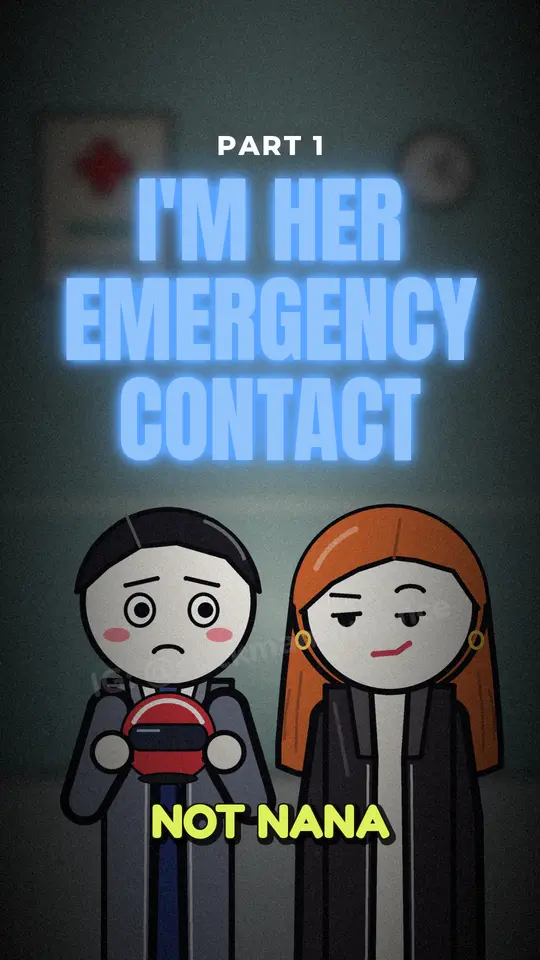
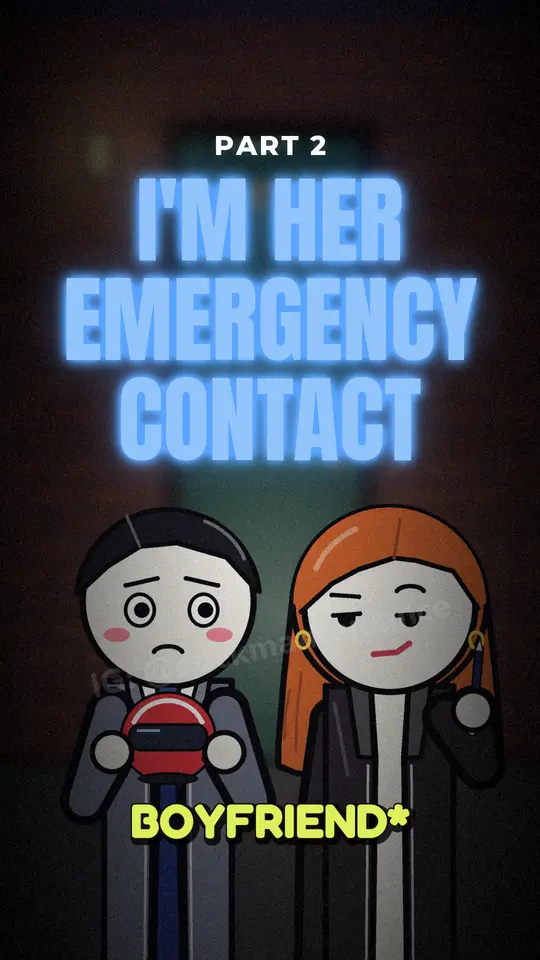
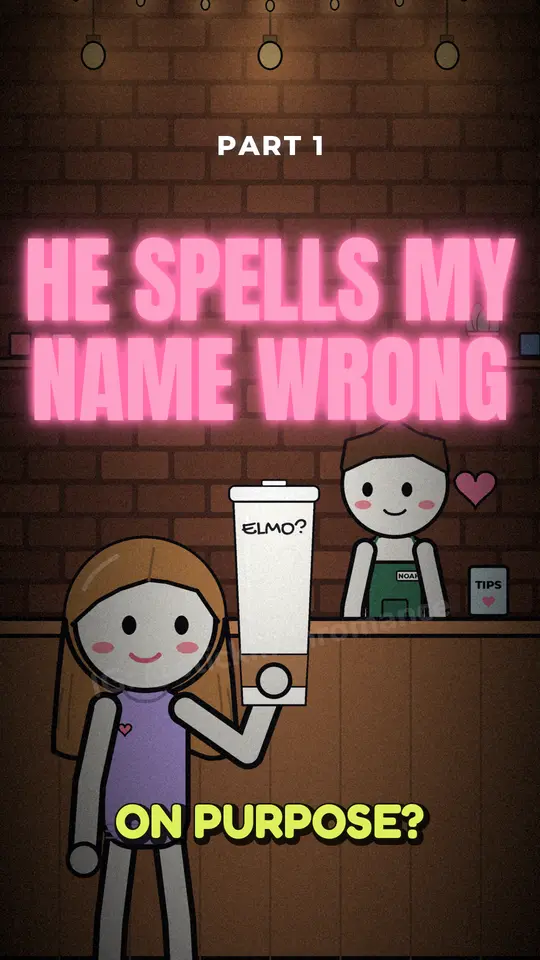
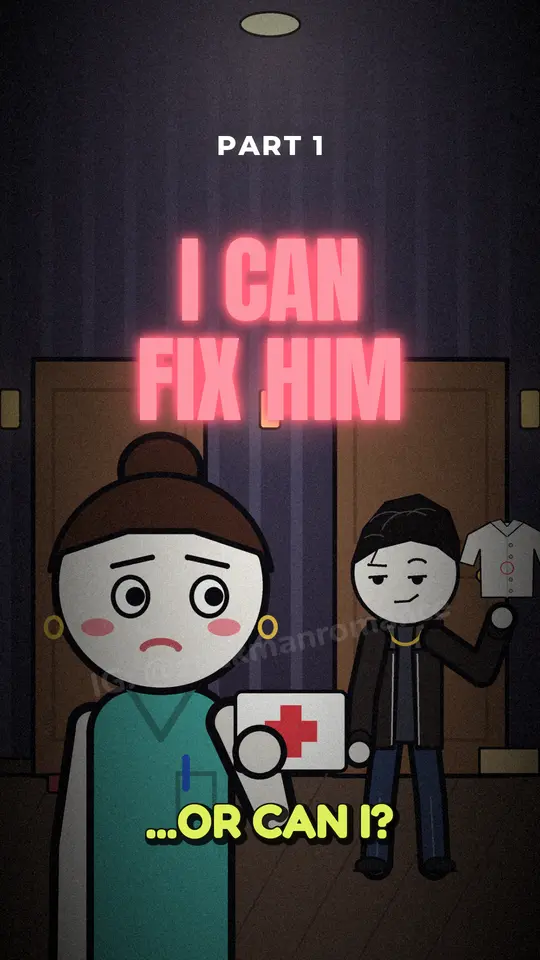
Covers are generated from drawn stills too, in two crops: the full frame and the one a profile grid shows. Motion without animation
There is no tweening and no lip-sync. Movement comes from three things: cuts, a still that switches on a spoken word, and a virtual camera. The camera eases through zooms and pans, punches in for a sixth of a second, shakes and settles, flashes color for a few frames, and dips the brightness for a blink on every cut.
My note on the first drafts became a rule: shakes when they are earned, never a constant zoom into the middle.
Captions you can read in a blink
At most two words on a card. A card breaks at punctuation, appears a thirtieth of a second before its word is spoken, pops up from 80% size, and takes the color of whoever is talking. Each card holds until just before the next word, so the screen is never empty while someone is speaking.
Voice, score and mix
Each character has one voice, and each line is generated once. The character takes are spliced into the narrator’s read. Pauses are cut down to a fifth of a second, the whole track runs a touch faster, and every word’s timing is rewritten through the same cuts so the captions stay locked.
Each story has its own instrumental score and recorded sound effects. The music is ducked under every line: on average the voice sits 13 to 16 decibels above the bed, and never closer than about 10.
One episode, three platforms
Each platform gets its own render with its own watermark, and all three share one sound mix. The safe areas are in the code: the part label and the title sit clear of each app’s interface, and nothing important is drawn in the band where the caption and buttons go.
On four cores, one platform of Part 1 renders in 6 minutes 46 seconds: the voice track, 51 stills, 1,937 frames, then the mix.
The audience writes the next part
Post, wait about a day, then open the next part on the winner: “Most of you said”, or “The top comment said”, with the comment redrawn on screen and its author credited. The winning choice changes how the next part opens, not the whole arc.
How an episode asks its question changed six times in a month, because the comments kept agreeing with each other and I wanted an argument. Comment a word, never a number. Then ask for a reason. Then a real fifty-fifty where each option costs something. Then open “top comment wins”. Then answer chips that pull against each other. Then no ready-made answers at all.
The frame audit
First drafts always contain drawing errors: an arm in an empty sling, a bed that could not exist, shoppers floating above a floor. So every episode goes through an audit before it renders: one frame for every half second, laid out on contact sheets, checked, fixed, and checked again until a full pass finds nothing.
The same goes for sound. The pipeline cannot hear, so loudness, gaps in the voice and moments with no caption are all measured by script. Listening is my job.
The hard parts
Each of these cost at least one version that was not good enough.
A stick figure has no body to show its age
- What happened
- In the first cut of a new series, the adult leads did not read clearly as adults. Patching it was not good enough.
- What fixed it
- The cut was scrapped and rebuilt: 2,940 lines added, 2,273 removed. It left behind a written never-and-always list, four adult faces with lidded, lashed eyes, ages stated on screen, and leads drawn at eye level with each other.
Narration stitched from pieces sounded jumpy
- What happened
- A read assembled from nine pieces of two takes had audible seams.
- What fixed it
- One continuous take, cut only where the recording is measurably silent, with the tail of each line kept and 20-millisecond fades.
Dead air at every voice handoff
- What happened
- 0.4 seconds of silence over a blank screen between speakers, then later a hard-edged 0.2-second hole.
- What fixed it
- Silences trimmed inside each clip, captions held across the gap, and short fades at every splice.
A flashback on screen for a fifth of a second
- What happened
- A shot was anchored to the word “It”, and the anchor matched “made it” earlier in the line.
- What fixed it
- Case-sensitive anchors, a check on every anchored word, and a check that shots start in order. The build now stops instead of rendering a wrong cut.
The app’s own interface covered the title
- What happened
- The safe-area rule was written down but never coded, so the part label was cut off on a phone.
- What fixed it
- The positions went into the renderer itself, so every reel inherits them.
Hands, necks and hair
- What happened
- Props floating beside hands, an arm passing through a neck, hair drawn over a shirt.
- What fixed it
- Arms that bend from the shoulder to an exact hand point, props that are held rather than placed, and hair drawn before the body.
Sound effects that buried the voice
- What happened
- Effects laid under whole sentences left the voice level with the bed.
- What fixed it
- Short ducked beds, effects brought down, and a script that reports voice over bed for every half second. The average after: 15.4 decibels.
The cost of every voice take
- What happened
- In one early part the narrator read about a third of the words only for them to be replaced by character takes.
- What fixed it
- One generation per line, character lines inserted instead of re-read, and an estimate before any credit is spent. My instruction was to save where it costs nothing and never where it costs quality.
A song that has to be bad on purpose
- What fixed it
- A sung take with off-key direction, the voice cracks exaggerated afterward, a phone-speaker filter, and a deliberately bad guitar.
Comments that all said the same thing
- What fixed it
- Six ending designs in a month, each one harder to agree on than the last.
The stories
Six stories, 24 episodes written as code.
| Story | Parts | Running time |
|---|---|---|
| He Spells My Name Wrong | 12 | 12 min 19 s |
| I Can Fix Him (complete) | 7 | 8 min 41 s |
| I’m Her Emergency Contact | 2 | 2 min 0 s |
| Everyone But Me | 1 | 1 min 3 s |
| Two Mias | 1 | 49 s |
| 6 Girlfriends | 1 | 43 s |
The rules I set
They started as corrections and became the production rulebook.
- Attention to detail. Revise the work. Do not finish until it is right.
- Do not render until I have seen the scene map.
- Fix errors before rendering. Check every frame.
- The audit I ran on this episode runs on every episode, in every series.
- Write the romance for the people who actually watch it.
- I want an ending people argue about, close to fifty-fifty.
How I worked
I write the direction and approve every scene map. AI coding sessions wrote the story bibles, the scripts and all of the Python, ran the renders, and audited frames from contact sheets. The voices, effects and scores come from ElevenLabs. ffmpeg encodes and measures.
What stays with me: the stories, the taste, the listening, the posting, and bringing the audience’s answer back for the next part.
Made with
- Drawing
- Python with numpy and Pillow. No image or video generator anywhere in the pipeline.
- Video
- ffmpeg: H.264, 30 frames per second, one render per platform.
- Voice and sound
- ElevenLabs voices, word timings, sound effects and instrumental scores.
- Type
- Anton, Fredoka, Montserrat, Nunito and Gochi Hand.
- Quality checks
- Word-anchor checks, contact sheets, a frame every half second, loudness and level reports.